Future Finance Finale: Celebrating Progress and Shaping the Future of Financial Services
Updated: Dec 11, 2025
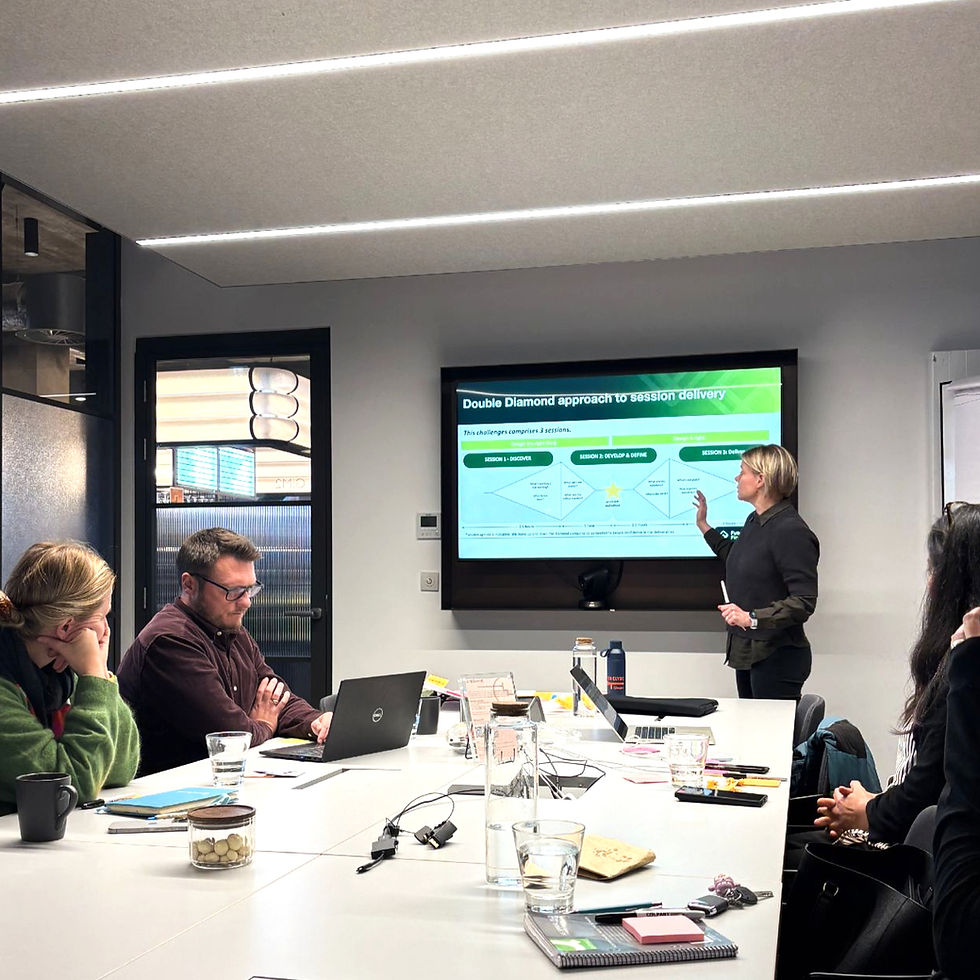
The Future Finance Finale event brought together financial services leaders, technology providers, academic experts, and programme participants for a half-day event celebrating the impact of the Future Finance programme and exploring what’s next for the sector.
Hosted in Bristol, the event showcased transformative work delivered through the programme, including research insights, case studies, and projects reshaping financial services in the UK. Attendees engaged with a wide range of initiatives, demonstrating solutions with real-world impact and potential for broader adoption. From cutting-edge fintech developments to strategies for organisational growth and resilience, the day illustrated how Future Finance is translating insight into action.

Dan Read, Technology and IP Partner at TLT LLP, opened the event by welcoming partners, innovators, and sector leaders, setting the tone for a morning focused on progress, partnership, and shaping the sector’s future. He said:
“The Future Finance programme has been fantastic to see build and grow over the life of the project. The ambitions of the programme closely align with the TLT values of collaboration, innovation, and considering problems from a different perspective. In financial services so much legacy thinking can often hold innovation back and Future Finance is trying to break that mindset. My call to action is twofold: firstly we need to keep actively seeking out new conversations and viewpoints on a local basis to make sure the Bristol fintech ecosystem continues to thrive and challenge norms, and secondly we need to be prepared to look further afield, encouraging collaboration nationally and internationally to avoid becoming too inwardly looking.”

Key research insights were presented by Jon Beaverstock, Future Finance Principal Investigator and Business School Deputy Dean; Sharon Collard, Chair in Personal Finance; and Ketch Adeeko, Lecturer in Strategy and Entrepreneurship, all from the University of Bristol, alongside Patrick Ring, Professor of Financial Services at Glasgow Caledonian University. Their presentations reflected the programme's evidence-based approach to driving meaningful change across the sector, exploring critical challenges in financial inclusion, gender bias in access to finance for women entrepreneurs, the advice gap, and how innovation success depends on culture, relationships, and customer behaviour - not just technology.
A focus of the morning was the Innovation in Action session, chaired by Abraham Mauleon Amieva, where programme participants and delivery partners explored the most effective support for driving measurable change in the sector. The discussion emphasised practical solutions grounded in real-world application to overcome barriers to innovation such as fear of failure, skills gaps, cultural aversion to change and uncertainty.

Abraham Mauleon Amieva, Future Finance Senior Research Associate at the University of Bristol, said:
“The most valuable impact that Future Finance has managed to produce for financial services is the increase of confidence levels, and that is something that is not necessarily easy to measure. It’s actually very hard to measure, but it’s something that will have positive outcomes in the future. The next stage for Future Finance is to keep doing more of the same that we’ve been doing, while also learning what the needs are so we can go and meet those needs in the market. Hopefully, we’ll be able to do that with Future Finance 2.0.”
The session included contributions from programme partners, including Helen Tanner, Founder & CEO of Data Cubed, who shared insights on Future Finance’s Innovation Adoption Consultancy programme and its role in accelerating digital adoption and business growth.

“The biggest enabler to innovation, in my opinion, is to have a beginner’s mindset. It’s having that mindset that our biggest competitor next year might not have even set up their own business yet. And if you set up a business today, you would probably do it very differently from how you would have done historically. So, it’s about constantly asking yourself, ‘If I set up today, what would I do differently?’ and maintaining that beginner’s mindset.”

Anna-Lisa Wesley, Cofounder and Director at Sapphire and Steel, spoke about the Collaborative Challenge Programme, which brings together stakeholders from industry, academia and policy to tackle key sector challenges. From improving access for vulnerable communities to preventing fraud and promoting diversity, the programme demonstrated tangible outcomes driven by shared experience and collective problem-solving. Her talk highlighted the importance of confidence built through open data, diverse voices, and cross-disciplinary collaboration, with the recognition that innovation happens at the edges where different sectors meet.
The agenda then moved to a panel discussion on ecosystem development, exploring how partnerships across fintech, established institutions, and research organisations can strengthen the UK’s financial innovation landscape. The conversation highlighted the importance of structures that enable coordinated action at scale.

Stuart Harrison, Programme Partner, Future Finance, said:
“The key thing the organisation has achieved so far is bringing together so many disparate organisations and people to work on common challenges and common issues. The Collaborative Challenge programme has been spot on - identifying challenges in financial services, with consumers and industry professionals, and then bringing together those interested or affected. That’s what’s been fantastic for me: bringing such a diverse set of people together to work on challenges.

The key opportunities ahead are to keep building on this. It would be such a shame if Future Finance stopped here, because we’ve learned so much and done so much, but it’s just the tip of the iceberg. There’s so much more to do, and it would be fantastic to continue those conversations and that networking, working on challenges together to deliver more impact to society as well as financial services.”

Jack Stanbury, Senior Project Manager at the University of Bristol, highlighted the programme's impact, including over 1,000 unique attendees at Future Finance events, 15 Innovation Adoption Consultancy projects undertaken, and, notably, 95% of participants in the 8-day Innovation Leadership Programme adopting new innovations. He also outlined the programme's next steps, emphasising continued support, cross-sector engagement, and insight generation as the foundation for Future Finance's ongoing development, with additional support secured to evolve delivery models and explore new possibilities in the coming quarter.
The morning’s talks concluded with a keynote address delivered by Dan Scholey, Chief Product Officer at Moneyhub, which looked ahead to the future of financial services, examining emerging technologies, the role of data, and the importance of partnerships in delivering sustainable, adaptive, and inclusive outcomes.

The atmosphere throughout the event was one of momentum, optimism, and shared commitment to driving meaningful change in financial services.
As Future Finance enters its next stage, the event reinforced that sustained progress depends on bringing together people, ideas, expertise, and real-world challenges - creating the conditions for innovation to thrive and impact to scale.
Want to stay up to date on Future Finance's latest news and developments? Follow us on LinkedIn.